
Introduction
Being honest, the majority of us do not begin to desire minimalistic living room. We start wanting less stress. I was not lying awake one day thinking that I should own less stuff. I awoke tired after cleaning the place, and bombarded by visual clatter, and annoyed that my own residence-room did not provide the peace I supposed it would.
My turning point was simple. One of my friends came by, studied my over-stocked shelves and stack of miscellaneous throws and said, You have so much stuff. It’s hard to even sit down.” She wasn’t being mean. What she was saying was a self-evident truth that I had not been paying attention to. That discussion got me going on a months-long trip of stripping, swapping and reconsidering the role that a living room has to play.
What I learnt was not about deprivation. It was about intention. What a small living room is not a white box furnace without furniture. It is a functional, calm space where each and every object is employed, either functionally or emotionally. Nothing is just “there.”
The Real Meaning
Less Stuff
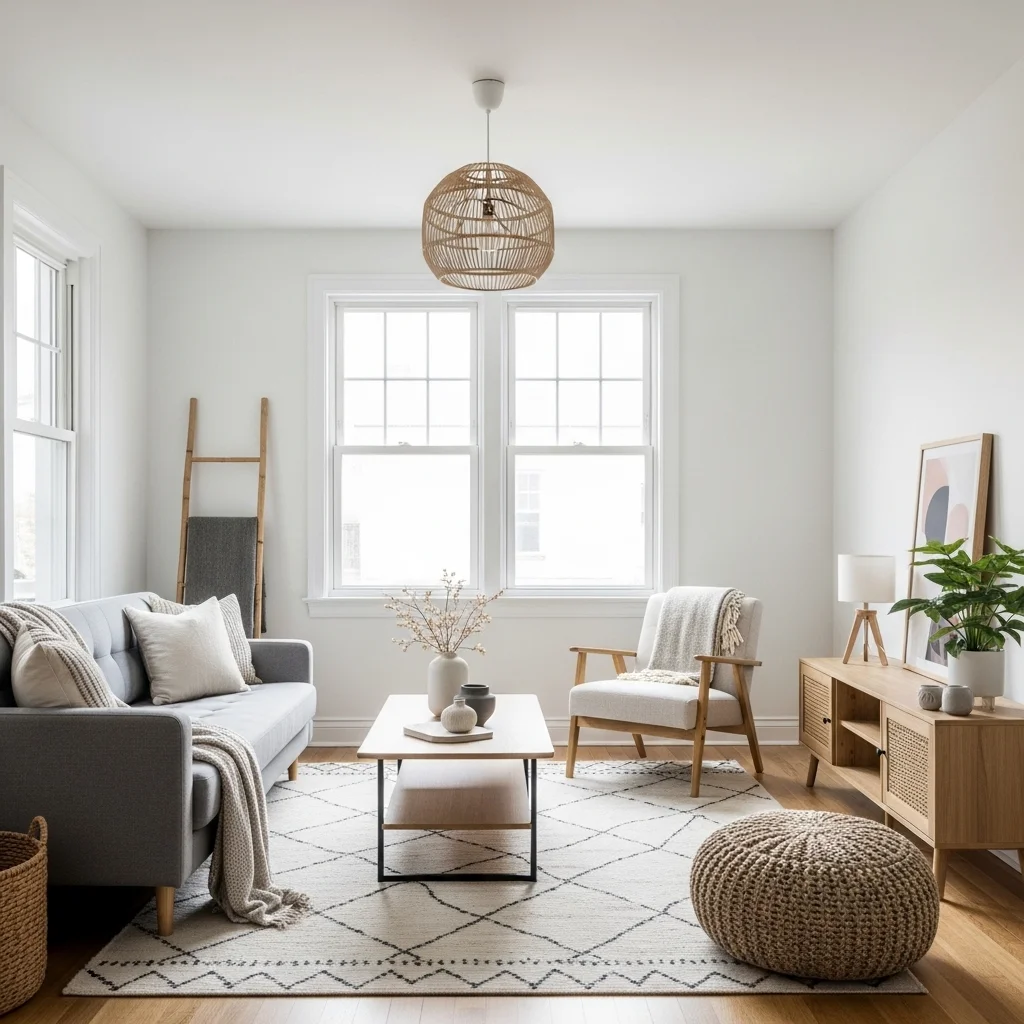
I believe that minimalism does not imply that one has almost nothing. That’s not it. It simply signifies being in possession of that which you need and love. I retained my couch, coffee table, media stand and an arm chair. All the rest of it, external side tables, ornamental ladders, that strange pouf which I never ventured to use, gone. The room didn’t feel empty. It felt available. Room to breathe, room to lumber, to live in.
Warm Neutrals
I also erred by painting the entire thing in a plain white. It looked clinical, cold. The second attempt was a cool gray which made the room small. What finally worked? Heat of creamy off-white upon the walls. It captures the afternoon sunlight wonderfully and could not be a laboratory. I brought comfort in natural wood colors on the floor and the furniture. You do not have to be neutral when you are placing textures on each other.
Meaningful Pieces
This was the hardest lesson. I gave away much that I did not love but I nearly overreacted and took away all the personal stuff. The room had become a hotel lobby. The fix? Instead, retaining objects that have a narrative. Three objects are put on my shelf: a ceramic bowl made by my niece, a photo regarding a family hike framed, and a small/wooden statu given by my grandfather. That’s it. No generic decor. When I am not able to tell why something is there it does not remain.
Furniture Rules
One Good Sofa
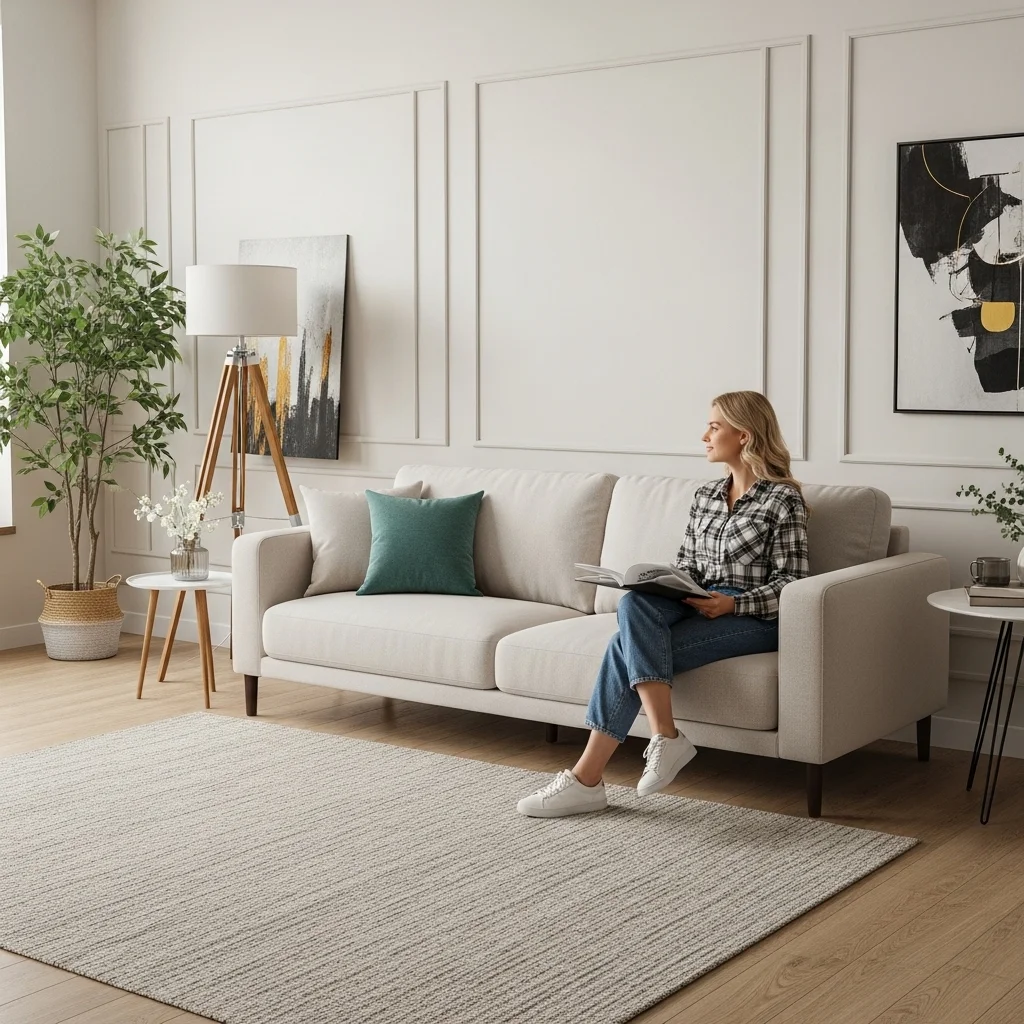
I had two sofas before. One could hardly be utilized as it was in front of a wall. I sold the two and purchased one well-constructed comfortable sofa that fits well in the room. It’s the room’s anchor. There is nothing that it is not required to revolve round. It is more prudent to put money in one quality workplace than to have two cheap items crowded.
Hidden Storage
My media console contains deep drawers. There is a lower shelf of my coffee table. This is non-negotiable. Remotes, edoosing alerts, children’s toys, everything has a home that we could never see. A well-structured room is based on transparent surfaces. You have everything in sight, you are always reminded of everything you should be doing or arranging.
Clean Lines
Golden carvings, heavy armour, overload of details, all these crammed in a room. There is an impression of openness on the simple silhouettes in straight or slightly curved lines. My new coffee table is a basic rectangle table with tapered legs. It only does its job without frothing at the mouth.
Lighting & Texture
Natural Light First
I removed the heavy dark curtainings. Had substituted them with blind, linen-like, panels. The difference was instant. The lighting of the room is neutral and reflects sunlight, forming changing pattern all day long. It’s free decor.
Warm Pools of Light
Mean-spirited overhead lamps destroy the atmosphere. I have one standingamp lamp with material shade that I use beside the armchair to read. A possibility of a single small table lamp on the console to provide ambient light. Both use warm (2700K) bulbs. It makes it warm and nesty, homely, as though in a favorite cafe and not an office.
Texture is Key
Without lots of color or objects, texture does the heavy lifting. A nubby wool throw on a smooth linen sofa. A rough jute rug under a polished wood table. A smooth ceramic vase next to a woven basket. Your fingers and eyes notice the contrast. It feels rich and inviting without being cluttered.
Why It Actually Works
It Saves Time
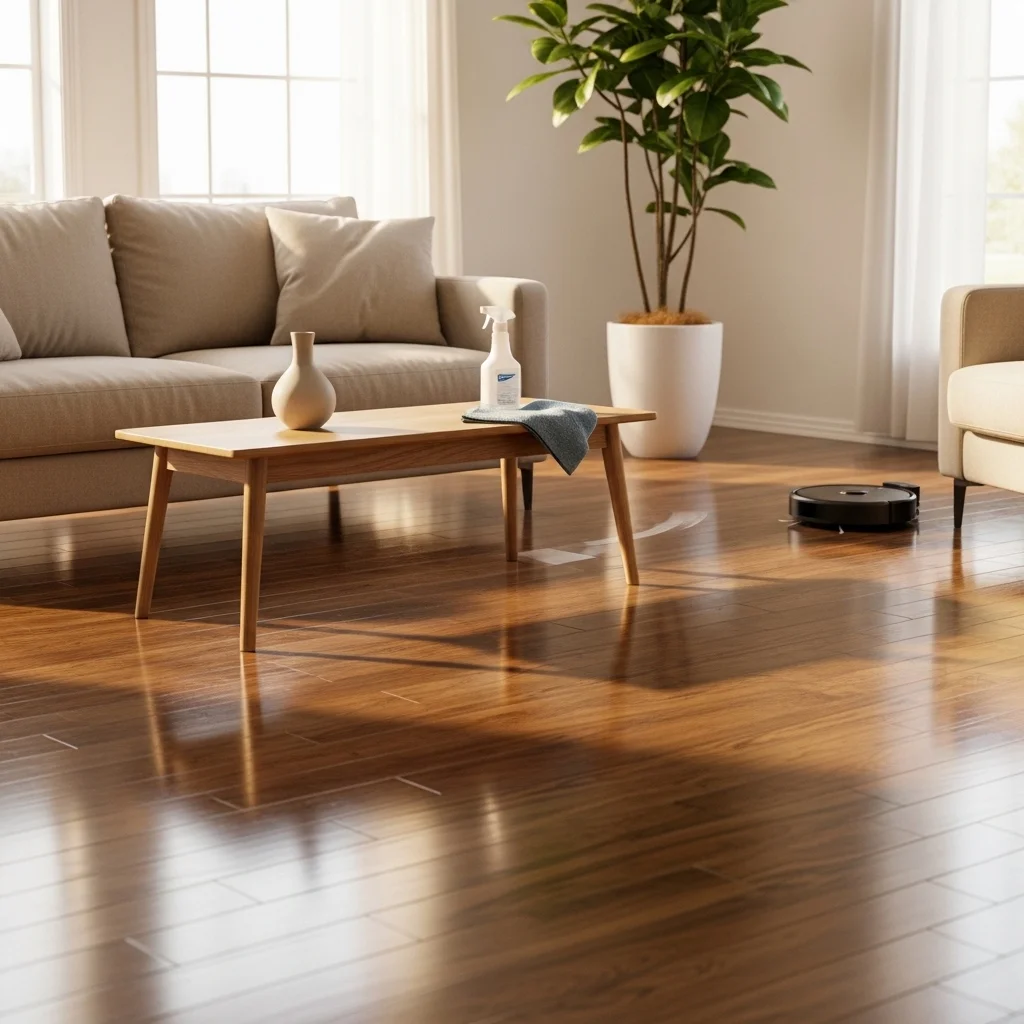
I would even spend hours on the weekends cleaning up the house, as I used to do. At this point, a dust and vacuum suffice. It is just that there is less to disinfect. The psychological burden of taking care of objects is eliminated.
It Saves Money
I do not enter HomeGoods and emerge like I did with a bag of stuff I picked at random and added to the shelf. When something does not fit the willful mood, I do not purchase it. My expenditure on decor reduced by approximately 70 percent. Instead, I invested such money in better furniture.
It’s Kid-Friendly
My daughter is able to stack her toys on a floor without me fearing that she will knock over a dozen delicate objects. We possess one huge woven basket to hold her childish enclosures. All in all, it clears off at the end of the day. After five minutes, the room is reset.
It Feels Better
This is the biggest one. The room is not simply appearing peaceful, but it is physically peaceful. The bleakness of my shoulders, as I enter. I read more talk moresimply could be, without the subliminal burdens of unclean clothes.
Getting Started
Don’t buy anything new. Start by removing.
Case by Case: Clear Ornaments of the coffee table. Clean it. Folder
This is the One-In, One-Out Rule: to bring something new in (a cushion, a plant) you need to take something old away. This keeps keeping accumulation at bay.
Wait on Big Changes: Wait a month to live with a sparsed-out room before getting a paint brush to paint the walls, or a mall to purchase new furniture. You may find that you do not need so much as you believe.
FAQs
Is minimalism design costly?
No. It’s often cheaper. You purchase less, yet purchase of quality. It is a huge price, time itself, the emotional effort of making decisions.
Can it feel cozy?
Absolutely. The presence of warm lighting, soft materials (wool, linen, cotton), natural wood, and vegetation make it warm. Cozy is a sensation not a heap of things.
Where do you store daily necessary things?
Storage: Furniture: `Use furniture with concealed storage underneath, such as ottomans, consoles and baskets, etc. Create a place of residence of remotes, chargers and daily clutter. Out of sight, out of mind.
How do you handle kids’ toys?
A single big and fashionable basket or bin in the room. Teach kids to put toys away. The regulation: playroom or bedroom, the place of toys. The living room is for calm.
What’s the first step?
Take off all on one side. A shelf, a table, a countertop. Keep back what you really do or do love. Do this in one area. Feel the difference. Then move to the next.
