
Introduction
I have worked the past ten years assisting folks to redesign their bedrooms and I can tell you this: the vast majority of the folks go about bedroom decorating in entirely opposite ways. They begin purchasing items and have no idea such as throw pillows, wall art, new bedding and so on. Then half a year later they are in a room that still does not feel right, and have bought stuff that does not necessarily go together.
Your bedroom is not the place where you sleep. And it is your cave, your own little Offred, And the first thing when you wake and the last thing before you sleep. It is not as simple as you might think it is to get it right.
Start With How You Actually Use the Room
You need to think about what you actually do in your bedroom besides sleep before you go to paint swatch books or flip through furniture magazines.
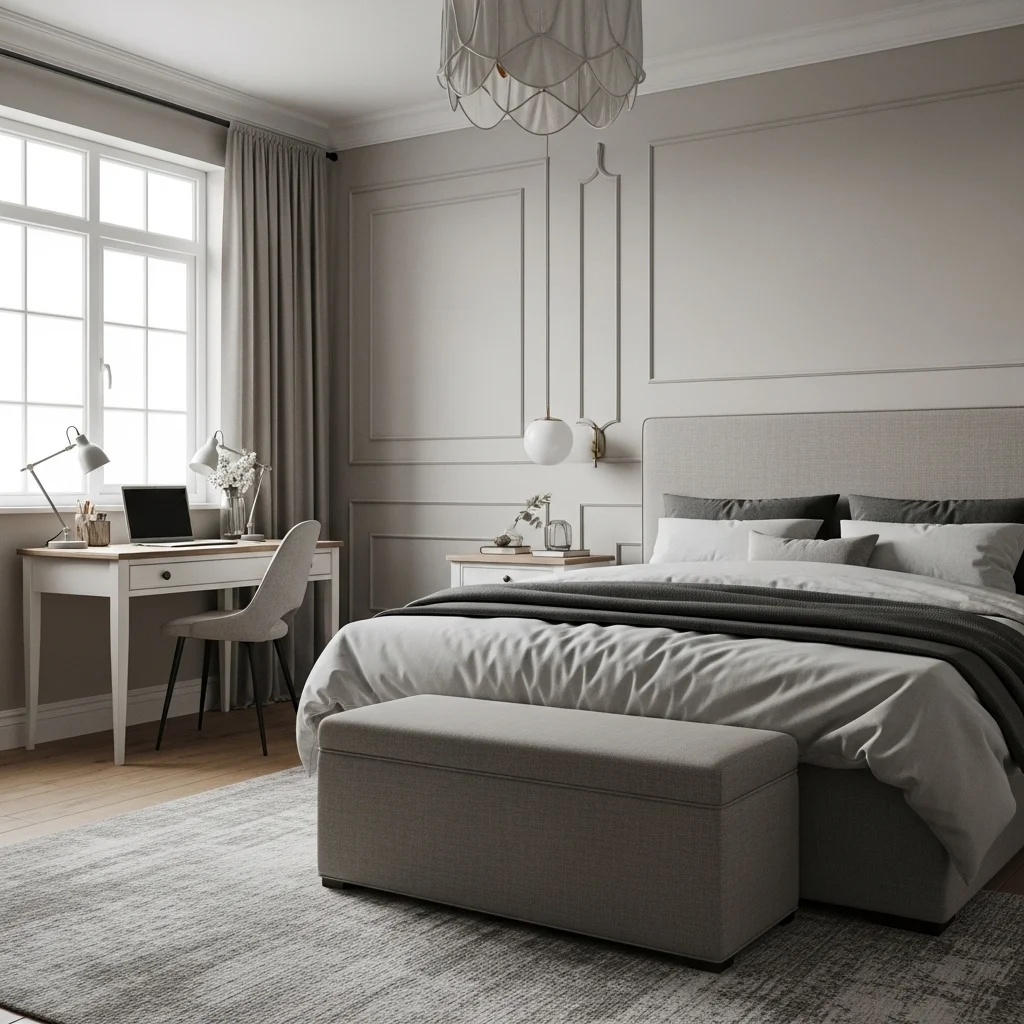
Do you read an hour before going to bed? You will need good task lighting and a good reading position. Do you have your home office in your bedroom too? Space and storage is put at the forefront. Do you only use it to get sleep at the end of the day? Make it A plain and simple.
A friend of mine had asked me to redesign her bedroom last year and she continuously told me that she wanted a reading nook. She noticed that she never reads in her bedroom, and after literally following her habits during two weeks, she noticed that she spent ten minutes on her phone and went to sleep. We did away with reading chair idea and adopted more appropriate bedside storage and lighting instead. She is much happier with the outcome.
The Bed Situation (Because It’s 60% of Your Room)
The bedroom is dominated by your bed hence this is where you should spend your energy and money.
Headboards get everything. I have observed drab bedrooms that seem to change totally by simply having an upholstered headboard. It fixes the room, gives a texture to it and creates a focus point. It doesn’t require spending a ton of money, even a homemade headboard covered in fabric is a huge installment.
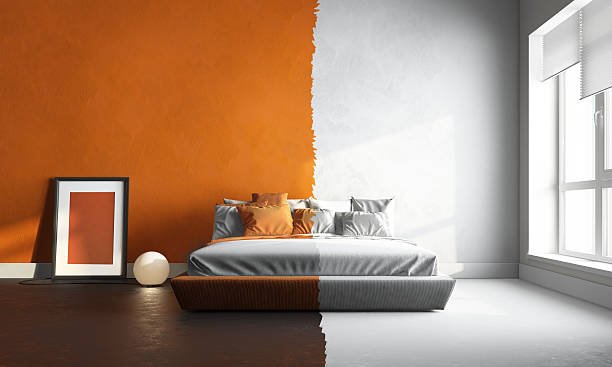
Provided that the purchase of a headboard is not an option, consider placing your bed against an accent wall. Not so long ago I had to paint after a customer the wall behind her bed in dark charcoal and the other four walls in light gray. The difference had produced an equal anchoring effect on the price of a gallon of paint.
Bedding layers are more important than thread count. The high-end hotel appearance is due to overlay, rather than costly bedclothes. Use your fitted and flat sheets as the base, next comes a duvet or coverlet, and then a throw blanket at the bottom and some pillows. Change textures – perhaps linen sheet with a velvet cover and cotton pillows.
Color Schemes That Don’t Bore You to Tears
All people say that bedrooms should be neutral and tranquil. Ok, ok, but neutral does not necessarily mean beige nothingness.
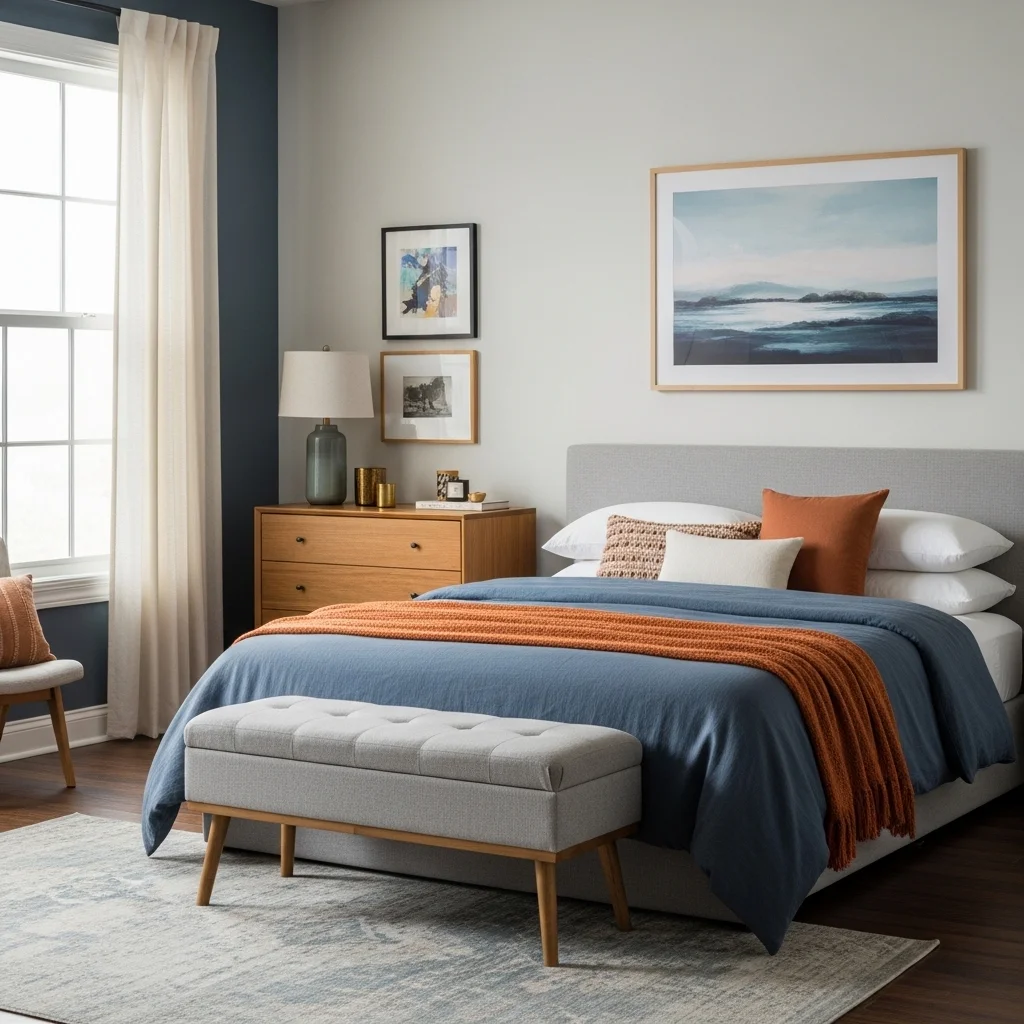
My rule is to go with the 60-30-10 rule. Your dominant color (walls and big furniture) should occupy a third of the room, secondary color (bedding, curtains, and other roughs) a third, and the last third should be the accent colors (throw pillows, artwork and accessories).
In actual color choice, consider what really relaxes you. I created a guy bedroom on the condition that the guy wanted charcoal gray walls since he considered light colors sterile. Companied by some warm wood furniture and some ramrod jar in brasses, it was refined and masculine, and he actually felt at home there. His last aqua bedroom had been a drab hotel.
Blues and greens will lean down easy. Warm colour such as terracotta, warm gray or soft blush might be very nice as long as you mix it with the right amount of other colours. I would personally not use strong reds or vivid oranges in large amounts they are stimulating and not relaxing.
Lighting Layers (Not Just One Overhead Fixture)
You require three kinds of lighting: general room lighting (ambient), reading or dressing light (task), and decorative or mood lighting (accent).
The overhead lights or embedded lights generally provide ambient lighting. You can at least swap in a neutral builder grade ceiling light with one that fits your style. A plain pendant or semi-flush is as little as $100-200 and is a game changer.
Task lighting refers to bedside reading lights. Table lamps on nightstands are my favorite, though swing-arm lamps mounted on walls are also an excellent solution when room on nightstands is limited. See that they are sufficiently bright to read by–so many decorative lamps do not serve much useful purpose.
Accent lights build environment. String lights are not exclusive to the teens; hung around a headboard or in a corner, they provide tunged ambient lighting. Behind the bed or beneath floating nightstands are LED strips which give that hotel room look. Candles also work, naturally, when you set them fire.
Storage Solutions That Don’t Scream “Storage”
Any decorating effort is killed by cluttering the bedroom. You may have the most perfect furniture and colors and have a load of clothes on the chairs and all about, and it will look horrible.
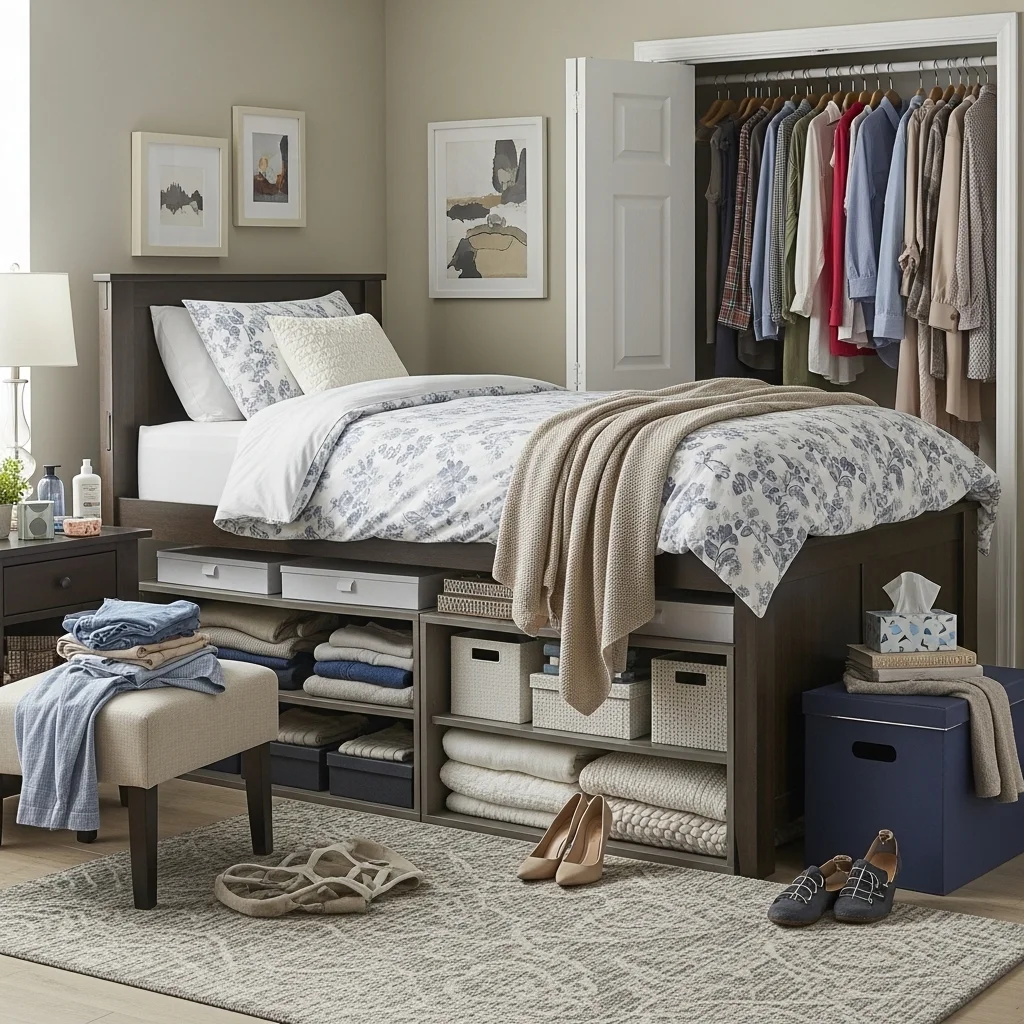
Under-bed storage is your friends in small bedrooms. Get bed risers to make it higher, and then store out of season clothes or extra bedding in flat storage boxes. Out of sight but accessible.
Dresser Nightstands rather than open shelves cover the haphazard pile up of the stuff that somehow grows on the bedside tables. And phone chargers and hand lotion and books and tissues whatever it is all there but contained.
Assuming you have your closet in view, make it presentable. The idea of pairing hangers is such a fuss until you actually do it. I replaced the wire hangers with some plain wooden ones, made her go through her closet color by color, and could now leave the door of the closet open without it seeming like an eye sore; it was even considered to be there on purpose.
Wall Decor Without the Gallery Wall Headache
On Pinterest, you will find gallery walls all over and these can be gorgeous but are also delicate and messy.
This is more likely to work out: a single piece of art about the size of a bed blanket (about 2/3 the width of your headboard) or a pair of matching artworks. Simple, bold, done.
If you are a fan of the gallery wall concept, do it up elsewhere on the wall where you may place things more at eye level and easily re-arrange. The wall on the other side of your bed is the best–you will see it through bed, and not worry about having it attached above your head.
Window Treatments That Actually Matter
The use of the curtains appears to be optional until you understand the extent of their influence with regard to the final appearance of the room.
Hang curtain rods above the frame of the window and bigger than the window. This gives the feeling of increased windows and higher ceilings. I normally fit a pole approximately 4-6 inches above the window, and stretch it to 3-4 inches on either side.
Curtain length matters too. They are only to scratch the floor or the pool a little- not stand clumsily a few inches high. That floating gaze causes the ceilings to appear low and the room is topsy-turvy.
In case of light control, the blackout curtains or blackout liners can be used to assist in the quality of sleep in case you are sensitive to light. The option of black out and sheers at different times of the day and night means layering sheer curtains under the window blackout panels, to provide you with choices.
Textiles and Textures (The Secret Sauce)
Homes that lack the use of different textures seem 2 dimensional despite the presence of excellent furnishings and paint.
Layered various materials: linen bedding and a thick knit throw, a jute floor paflen, pillows made of velvet, possibly a fur faux fur elsewhere. These various textures make the room appear interesting to look at as well as cause the room to appear more costly than it is.
The space is anchored with the help of rugs, particularly in case of hardwood or tile floorings. Preferably buy one large enough so that it stretches no less than 18-24 inches along the sides of your bunk. Space in tiny rugs would be out of place.
Plants (Real Ones If Possible)
I have heard all people say this but plants do indeed give bedrooms a boost. They bring life, color and quality air.
When you are horrible with plants like I was, do the low-maintenance ones. Snake periwinkle and potho are plants that are very tolerant to neglect. My pothos is four years old and I have done very little to keep it alive- it is on a high shelf and receives indirect light and probably gets watered a few times every two months.
A single plant will help. The last layer of life in the room is the presence of medium-sized on a nightstand or dresser or a large floor plant in a corner.
Mistakes I See Constantly
Placing all furnishing at the wall makes rooms look like waiting rooms. Drag nightstands a little off the wall where there is space do it makes the space- it seems less solid.
Excessive similar furniture of such bedroom sets. Mix it up. These nightstands need not be a match to your dresser. The contrasting yet complementary works make the pieces more interesting to watch.
Ignoring the ceiling. Paint it, put an interesting light source in it, perhaps wallpaper it to make it dramatic. Lifeless beings lose sight of the fact that it is a complete surface.
The single source of lights is overhead lights. It produces inhospitable shadows and bad light. Add lamps, please.
Furniture that comes with it without even occupying the house. Get the bare essentials, stay in it a little, keep adding stuff as you know what you really need.
Final Thoughts
It is not about the rules and imitating the appearances that you have in the magazines and decorate the bedroom. It is all about the establishment of the environment that actually works in your favor and makes you feel good.
Begin with functionality, create your palette based on what you really appreciate, layer your light, organize your storage, and personalize it with some textures and personal touches.
However, most importantly, you should give yourself the authority to transform the space as time goes by. After three years of personal bedroom decoration and renovation, what I have is much better but still in the process of improvement as, over that time, I have fine-tuned what is really a good use of space and what only seemed to be good in theory.
FAQs
So what am I supposed to update at first in my bedroom?
Bedding and pillows. They are the largest pieces to look at at the expense and immediately revive the space.
I need to know how to make a small bedroom appear bigger.
Light colors should be used, mirrors should be hung, furniture should not be crowded and cluttered. Vertical storage is used to maximize the space.
Is matching of bedroom furniture?
No, combining furniture is more interesting to look at. Efforts to match should be made complementary styles.
Which colors should be used in bedrooms?
Blues, greens and warm neutrals are most invite of sleep but use the colors that you are always calm with.
What is the number of pillows that should be on a bed?
The ideal number of works is 4-6, i.e., two sleeping at the same time, two decorative shams, and one or two decorative pillows.
And I do I need blackout curtains?
Yes, if you are sensitive to the light or have the night shifts. Otherwise, they are optional and still enhance the quality of sleep of the majority.
